Snow right now

  • Powder chaseWhere it is snowing right now, ranked by fresh snow.
  • Trending resortsDaily powder alerts, bluebird days and storm watches.
  • Epic Pass resortsEvery Epic mountain with its live conditions.
  • Ikon Pass resortsEvery Ikon mountain with its live conditions.
  • Resort globeSpin the globe and browse resorts by country.

Plan your ski trip

  • Resort discoverySearch and filter resorts by country, pass and snow.
  • Resort comparisonsCompare ski areas, passes and conditions side by side.
  • Snow reliabilityCompare natural snow seasons using historical weather data.
  • Resort opening datesCheck planned season openings and their sources.
  • December ski guideChoose an Alpine resort for early December or Christmas.

Ski tools

  • Rent or buy ski gearCompare equipment costs for the number of days you ski.
  • Ski form analysisReview a front-view ski clip with analysis on your device.
  • Snow report widgetsAdd resort conditions to your own website.

Read

  • Science of the sendSki physics, injury biomechanics and a carve simulator.
  • BlogGuides, tips and product notes from SkiMate.

© 2026 SkiMate. Check official resort reports before you go.

Chat with SkiMatePrivacy policy

SkiMate

SkiMate
Rasos de Peguera/Best time to ski

Best time to ski Rasos de Peguera

Snowiest in January

Average monthly snowfall at Rasos de Peguera drawn as a mountain range, one peak per month. The tallest peak is March at 38 cm. The full numbers are in the month by month table below.
Your monthNumbersMonthsQuestionsNearbyMethod

When are you thinking of going?

Pick a month to see what a typical year looks like then.

Each bar shows how much of the month usually has a 30 cm natural base. The best months are in teal.

January

Unlikely to have snow

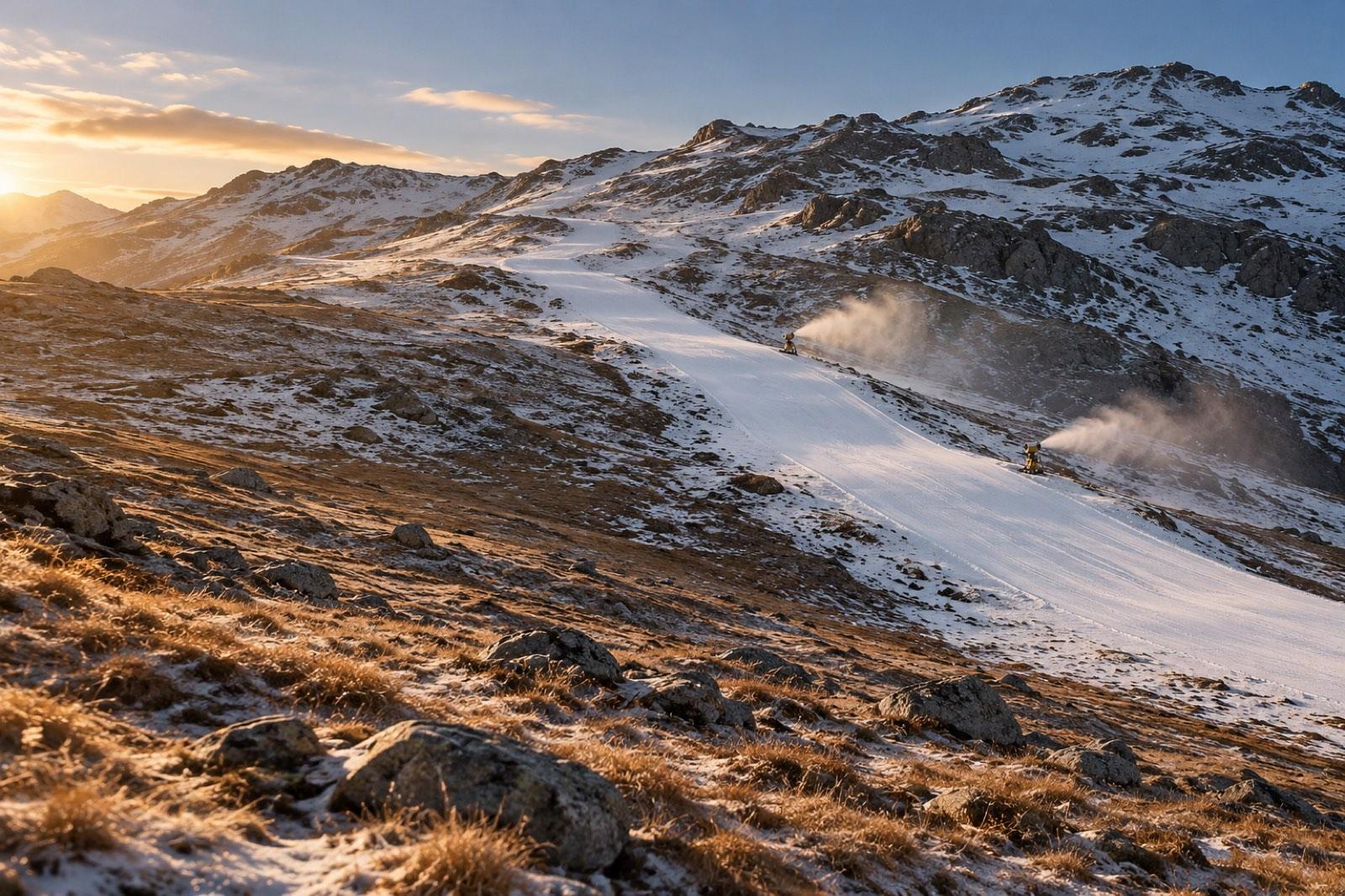
Typical thin cover, helped by snowmaking, illustrative photo

Natural snow is unlikely at Rasos de Peguera in January. Expect to rely on snowmaking or a lucky storm.

Natural baseThin, about 8 of 31 days
Fresh snow33 cm, snow on about 1 day a week
Temperature-3°C, the coldest month
JulAugSepOctNovDecJanFebMarAprMayJun
Beyond the averagesAsk SkiMate about January
  • Where is snowier?
  • Does snowmaking help?

Averages for January from 1995 to 2024 at 1,931 m. This is what a typical year looks like, not a forecast. Closer to your trip, check live conditions.

Compare with Estació d'esquí Port del Comte and Estació d'esquí nòrdic Tuixent - La Vansa in January
33 cm
38 cm

July

0 cm snowfall

0 snowfall days

14°C mean

0 days with a 30 cm base

August

0 cm snowfall

0 snowfall days

14°C mean

0 days with a 30 cm base

September

0 cm snowfall

0 snowfall days

10°C mean

0 days with a 30 cm base

October

7 cm snowfall

1 snowfall day

6°C mean

0 days with a 30 cm base

November

24 cm snowfall

4 snowfall days

1°C mean

0 days with a 30 cm base

December

28 cm snowfall

4 snowfall days

-2°C mean

3 days with a 30 cm base

January

33 cm snowfall

6 snowfall days

-3°C mean

8 days with a 30 cm base

February

23 cm snowfall

5 snowfall days

-2°C mean

11 days with a 30 cm base

March

38 cm snowfall

7 snowfall days

0°C mean

11 days with a 30 cm base

April

36 cm snowfall

7 snowfall days

3°C mean

5 days with a 30 cm base

May

8 cm snowfall

2 snowfall days

7°C mean

0 days with a 30 cm base

June

0 cm snowfall

0 snowfall days

11°C mean

0 days with a 30 cm base

JulAugSepOctNovDecJanFebMarAprMayJun

Snowfall, cm

000724283323383680

Mean temperature at 1,931 m, °C

Freezing
14°14°10°6°1°−2°−3°−2°0°3°7°11°
  • Snowcapped peaks are the best months

The numbers

Snowfall a year
198 cm
Average, 1995 to 2024
Natural season
Rare
Relies on snowmaking
Snowiest month
March
38 cm on average
Snow reliability
Variable
14% of winters

Rasos de Peguera averages 198 cm of snowfall a year at 1,931 m, based on weather records from 1995 to 2024. Natural snow rarely builds a lasting 30 cm base here, so the season leans on snowmaking and fresh storms. March is the snowiest month, with 38 cm over 7 snowfall days on average. January is the coldest, averaging -3°C. 14% of winters reached 100 days of skiable natural snow, which rates it variable. It ranks 20 of 34 resorts we track in its country.

Month by month

Averages, 1995 to 2024Snow seasonBest months
Average monthly snow and temperature at Rasos de Peguera, 1995 to 2024
MonthSnowfall cmSnowfall daysMean temp °CDays with 30 cm baseModelled depth cmYears with 20 cm or more
JulyJul00.013.9000 of 30
AugustAug00.013.5000 of 30
SeptemberSep00.09.5000 of 30
OctoberOct70.96.2003 of 30
NovemberNov244.10.50413 of 30
DecemberDec284.1-2.131213 of 30
JanuaryJan335.6-2.982118 of 30
FebruaryFeb235.3-2.1112916 of 30
MarchMar387.10.2112623 of 30
AprilApr366.52.751421 of 30
MayMay81.86.7013 of 30
JuneJun00.111.2000 of 30

Questions skiers ask

When is the best time to ski Rasos de Peguera?

Snowiest in January. That is the snowiest month cold enough to keep the snow, based on 1995 to 2024 weather records.

Does Rasos de Peguera get snow in November?

Sometimes. In 13 of 30 years, November brought at least 20 cm of snow to Rasos de Peguera, averaging 24 cm over 4 snowfall days at 1°C. A lasting natural base is rare that month.

Does Rasos de Peguera get snow in December?

Sometimes. In 13 of 30 years, December brought at least 20 cm of snow to Rasos de Peguera, averaging 28 cm over 4 snowfall days at -2°C. A natural base of 30 cm or more is on the ground for about 3 days of the month.

Does Rasos de Peguera get snow in April?

Usually. In 21 of 30 years, April brought at least 20 cm of snow to Rasos de Peguera, averaging 36 cm over 7 snowfall days at 3°C. A natural base of 30 cm or more is on the ground for about 5 days of the month.

How much snow does Rasos de Peguera get a year?

About 198 cm a year at 1,931 m, averaged over 1995 to 2024. March is usually the snowiest month.

When does the ski season start and end at Rasos de Peguera?

Historical weather shows no month that reliably holds a 30 cm natural base, so the season depends on snowmaking. Check the resort for official dates.

Is Rasos de Peguera snow-sure?

Variable. In 14% of the 29 winters we analysed, the modelled natural base stayed at 30 cm or more for at least 100 days, averaging 39 days a season.

Nearby, sorted by distance

  • Best time to ski Estació d'esquí Port del Comte17 km, 17% reliable
  • Best time to ski Estació d'esquí nòrdic Tuixent - La Vansa21 km, 17% reliable
  • Best time to ski Estació d'esquí de fons de Guils-Fontanera36 km, 7% reliable
  • Best time to ski Puigmal 290037 km, 41% reliable
  • Best time to ski Estació de muntanya Vall de Núria43 km, 21% reliable
  • Best time to ski Porté-Puymorens45 km, 62% reliable

Keep planning

  • Check resort opening datesCheck the planned season start and its source before booking.
  • Rasos de Peguera live conditions
  • Most snow-reliable resorts in Spain
  • Global snow reliability ranking
  • Skiing in Spain
How we worked this out

Every number comes from modelled daily weather for 1995 to 2024, read through our own Open-Meteo server from the ERA5 and ERA5-Land reanalyses of the Copernicus Climate Change Service. We request one point per resort at its mid-mountain elevation, and temperatures are adjusted to that height.

Reanalysis snowfall belongs to a grid cell that can sit far above or below the slopes, so we split each day's precipitation into snow and rain using the temperature at the resort: all snow at 0°C or colder, all rain from 3°C, and a blend in between, at 0.7 cm of snow per mm of water. A snowfall day is one with at least 1 cm.

The natural base comes from a simple degree-day snow model: snow water builds with every snowfall and melts by 3 mm for each degree of daily mean temperature above freezing, at a settled density of 300 kg per cubic metre. A month is in the natural season when a base of 30 cm or more is on the ground for at least half of its days.

Snow reliability applies the 100 day rule used in ski tourism research: a winter counts as reliable when the modelled base holds 30 cm or more for at least 100 days. The score is the share of complete winters that passed, and 70% or more (seven winters in ten) rates as snow-sure.

These are natural snow figures from historical weather, not official opening dates or snow reports. Snowmaking, grooming, glaciers and local wind loading all change what you find on the hill, so check live conditions before you travel.

Weather data by Open-Meteo.com, based on ERA5 and ERA5-Land from the Copernicus Climate Change Service. Contains modified Copernicus Climate Change Service information 2026, used under CC BY 4.0.