Best in December, January and March
Pick a month to see what a typical year looks like then.
Each bar shows how much of the month usually has a 30 cm natural base. The best months are in teal.

December
One of the best months
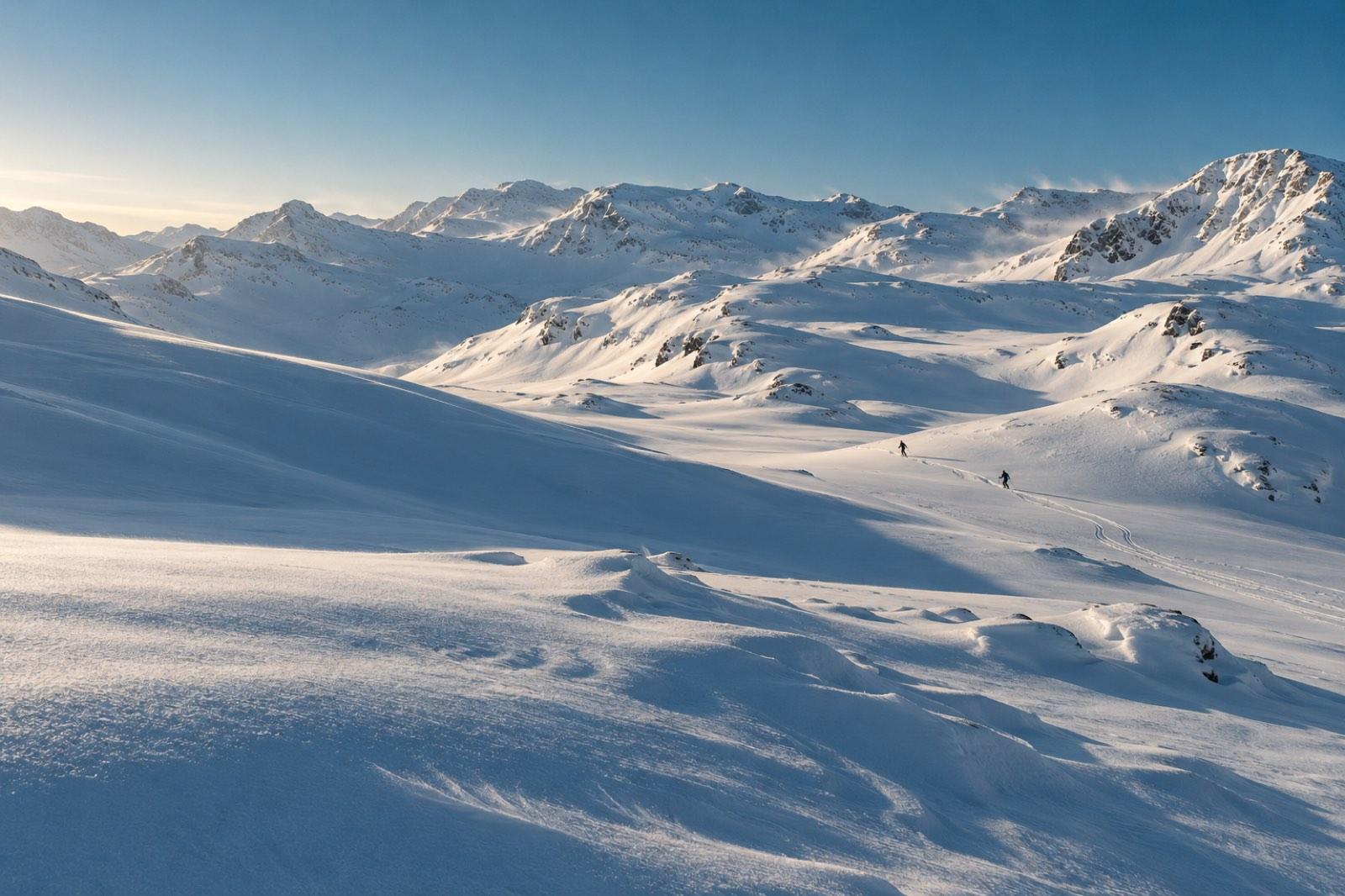
Typical conditions with a full base, illustrative photo
December is one of the best months to ski Sasquatch Mountain, and every December on record brought at least 20 cm of fresh snow.
Averages for December from 1995 to 2024 at 1,146 m. This is what a typical year looks like, not a forecast. Closer to your trip, check live conditions.
Sasquatch Mountain averages 1,270 cm of snowfall a year at 1,146 m, based on weather records from 1995 to 2024. A natural base of 30 cm or more is typically on the ground from November to June, about 234 days a season. January is the snowiest month, with 251 cm over 20 snowfall days on average. January is the coldest, averaging -5°C. 100% of winters reached 100 days of skiable natural snow, which rates it snow-sure. It ranks 2 of 74 resorts we track in its country.
| Month | Snowfall cm | Snowfall days | Mean temp °C | Days with 30 cm base | Modelled depth cm | Years with 20 cm or more |
|---|---|---|---|---|---|---|
| JulyJul | 0 | 0.0 | 13.0 | 8 | 50 | 0 of 30 |
| AugustAug | 0 | 0.0 | 13.1 | 1 | 2 | 0 of 30 |
| SeptemberSep | 1 | 0.3 | 9.6 | 0 | 0 | 0 of 30 |
| OctoberOct | 53 | 7.3 | 3.8 | 1 | 4 | 20 of 30 |
| NovemberNov | 230 | 17.8 | -1.5 | 18 | 58 | 30 of 30 |
| DecemberDec | 251 | 19.6 | -4.7 | 31 | 174 | 30 of 30 |
| JanuaryJan | 251 | 19.6 | -4.7 | 31 | 298 | 30 of 30 |
| FebruaryFeb | 162 | 15.6 | -4.1 | 28 | 390 | 30 of 30 |
| MarchMar | 191 | 18.8 | -2.1 | 31 | 469 | 30 of 30 |
| AprilApr | 103 | 13.3 | 0.9 | 30 | 515 | 29 of 30 |
| MayMay | 28 | 4.9 | 5.7 | 31 | 437 | 17 of 30 |
| JuneJun | 1 | 0.3 | 9.1 | 24 | 233 | 0 of 30 |
Best in December, January and March. Those months combine the most reliable natural base with the most fresh snow, based on 1995 to 2024 weather records.
Yes, reliably. In 30 of 30 years, November brought at least 20 cm of snow to Sasquatch Mountain, averaging 230 cm over 18 snowfall days at -1°C. A natural base of 30 cm or more is on the ground for about 18 days of the month.
Yes, reliably. In 30 of 30 years, December brought at least 20 cm of snow to Sasquatch Mountain, averaging 251 cm over 20 snowfall days at -5°C. A natural base of 30 cm or more is on the ground for about 31 days of the month.
Yes, reliably. In 29 of 30 years, April brought at least 20 cm of snow to Sasquatch Mountain, averaging 103 cm over 13 snowfall days at 1°C. A natural base of 30 cm or more is on the ground for about 30 days of the month.
About 1,270 cm a year at 1,146 m, averaged over 1995 to 2024. January is usually the snowiest month.
Historical weather records show a natural snow season from November to June. Official opening and closing dates are set by the resort and can shift with snowmaking and early storms.
Snow-sure. In 100% of the 29 winters we analysed, the modelled natural base stayed at 30 cm or more for at least 100 days, averaging 234 days a season.
Every number comes from modelled daily weather for 1995 to 2024, read through our own Open-Meteo server from the ERA5 and ERA5-Land reanalyses of the Copernicus Climate Change Service. We request one point per resort at its mid-mountain elevation, and temperatures are adjusted to that height.
Reanalysis snowfall belongs to a grid cell that can sit far above or below the slopes, so we split each day's precipitation into snow and rain using the temperature at the resort: all snow at 0°C or colder, all rain from 3°C, and a blend in between, at 0.7 cm of snow per mm of water. A snowfall day is one with at least 1 cm.
The natural base comes from a simple degree-day snow model: snow water builds with every snowfall and melts by 3 mm for each degree of daily mean temperature above freezing, at a settled density of 300 kg per cubic metre. A month is in the natural season when a base of 30 cm or more is on the ground for at least half of its days.
Snow reliability applies the 100 day rule used in ski tourism research: a winter counts as reliable when the modelled base holds 30 cm or more for at least 100 days. The score is the share of complete winters that passed, and 70% or more (seven winters in ten) rates as snow-sure.
These are natural snow figures from historical weather, not official opening dates or snow reports. Snowmaking, grooming, glaciers and local wind loading all change what you find on the hill, so check live conditions before you travel.
Weather data by Open-Meteo.com, based on ERA5 and ERA5-Land from the Copernicus Climate Change Service. Contains modified Copernicus Climate Change Service information 2026, used under CC BY 4.0.