Best time to ski Selský dvůr
Snowiest in January
- Snowcapped peaks are the best months
When are you thinking of going?
Pick a month to see what a typical year looks like then.
Each bar shows how much of the month usually has a 30 cm natural base. The best months are in teal.
January
Unlikely to have snow
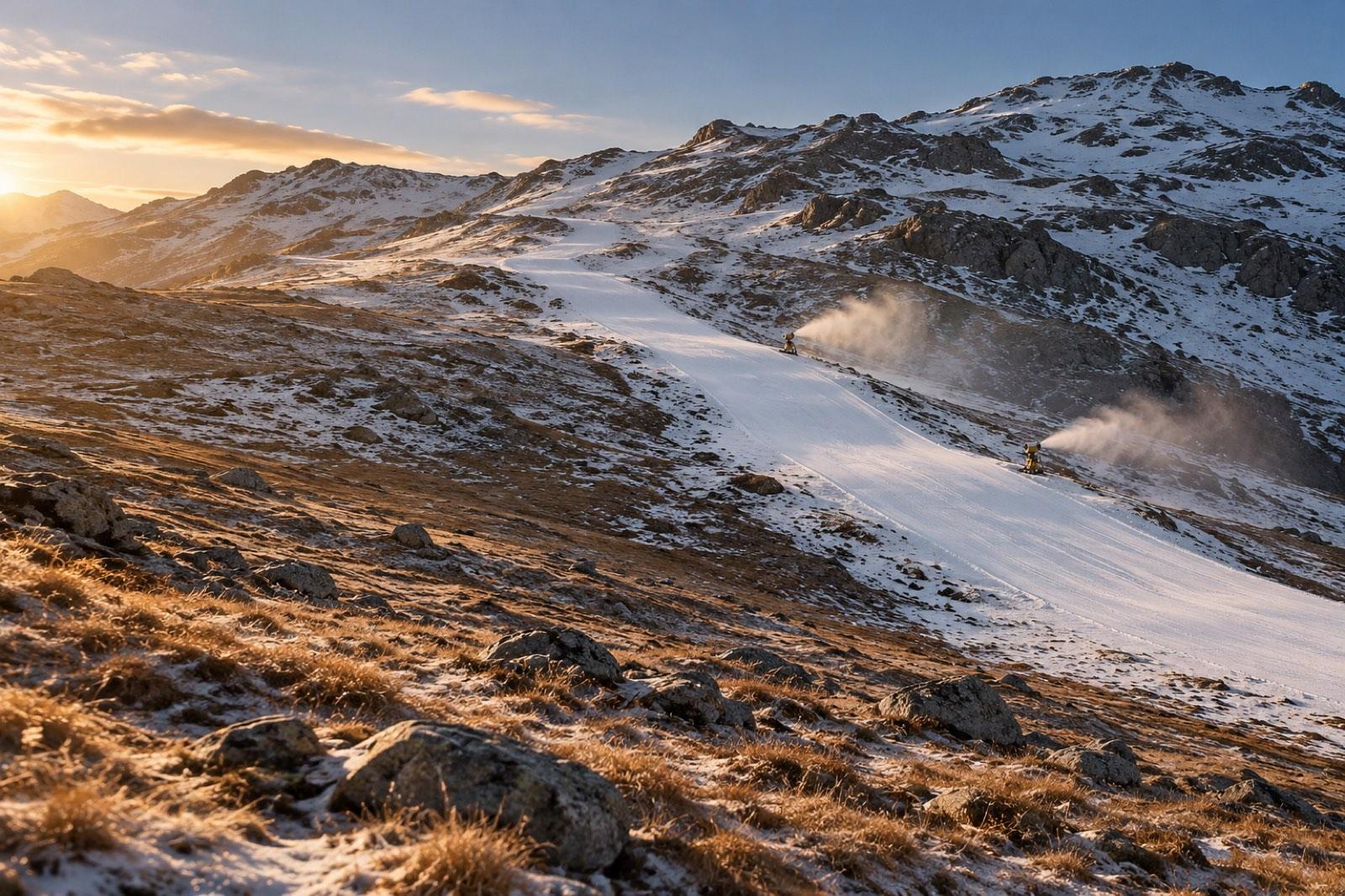
Typical thin cover, helped by snowmaking, illustrative photo
Natural snow is unlikely at Selský dvůr in January. Expect to rely on snowmaking or a lucky storm.
Averages for January from 1995 to 2024 at 593 m. This is what a typical year looks like, not a forecast. Closer to your trip, check live conditions.
The numbers
- Snowfall a year
- 169 cm
- Average, 1995 to 2024
- Natural season
- Rare
- Relies on snowmaking
- Snowiest month
- January
- 48 cm on average
- Snow reliability
- Marginal
- 3% of winters
Selský dvůr averages 169 cm of snowfall a year at 593 m, based on weather records from 1995 to 2024. Natural snow rarely builds a lasting 30 cm base here, so the season leans on snowmaking and fresh storms. January is the snowiest month, with 48 cm over 11 snowfall days on average. January is the coldest, averaging -2°C. 3% of winters reached 100 days of skiable natural snow, which rates it marginal. It ranks 72 of 121 resorts we track in its country.
Month by month
| Month | Snowfall cm | Snowfall days | Mean temp °C | Days with 30 cm base | Modelled depth cm | Years with 20 cm or more |
|---|---|---|---|---|---|---|
| JulyJul | 0 | 0.0 | 17.0 | 0 | 0 | 0 of 30 |
| AugustAug | 0 | 0.0 | 16.9 | 0 | 0 | 0 of 30 |
| SeptemberSep | 0 | 0.0 | 12.8 | 0 | 0 | 0 of 30 |
| OctoberOct | 3 | 0.6 | 8.4 | 0 | 0 | 1 of 30 |
| NovemberNov | 19 | 4.6 | 3.2 | 0 | 1 | 10 of 30 |
| DecemberDec | 36 | 9.2 | -0.9 | 1 | 7 | 23 of 30 |
| JanuaryJan | 48 | 10.7 | -2.2 | 5 | 15 | 26 of 30 |
| FebruaryFeb | 34 | 7.6 | -0.9 | 7 | 20 | 20 of 30 |
| MarchMar | 22 | 6.3 | 1.7 | 4 | 10 | 17 of 30 |
| AprilApr | 8 | 2.0 | 6.8 | 0 | 1 | 3 of 30 |
| MayMay | 0 | 0.0 | 11.9 | 0 | 0 | 0 of 30 |
| JuneJun | 0 | 0.0 | 15.4 | 0 | 0 | 0 of 30 |
Questions skiers ask
When is the best time to ski Selský dvůr?
Snowiest in January. That is the snowiest month cold enough to keep the snow, based on 1995 to 2024 weather records.
Does Selský dvůr get snow in November?
Sometimes. In 10 of 30 years, November brought at least 20 cm of snow to Selský dvůr, averaging 19 cm over 5 snowfall days at 3°C. A lasting natural base is rare that month.
Does Selský dvůr get snow in December?
Usually. In 23 of 30 years, December brought at least 20 cm of snow to Selský dvůr, averaging 36 cm over 9 snowfall days at -1°C. A natural base of 30 cm or more is on the ground for about 1 days of the month.
Does Selský dvůr get snow in April?
Only a little. In 3 of 30 years, April brought at least 20 cm of snow to Selský dvůr, averaging 8 cm over 2 snowfall days at 7°C. A lasting natural base is rare that month.
How much snow does Selský dvůr get a year?
About 169 cm a year at 593 m, averaged over 1995 to 2024. January is usually the snowiest month.
When does the ski season start and end at Selský dvůr?
Historical weather shows no month that reliably holds a 30 cm natural base, so the season depends on snowmaking. Check the resort for official dates.
Is Selský dvůr snow-sure?
Marginal. In 3% of the 29 winters we analysed, the modelled natural base stayed at 30 cm or more for at least 100 days, averaging 17 days a season.
Nearby, sorted by distance
- Best time to ski Mariánská Hora1 km, 7% reliable
- Best time to ski Tanvaldský Špičák1 km, 7% reliable
- Best time to ski Světlý vrch1 km, 7% reliable
- Best time to ski Ski areál Detoa2 km, 7% reliable
- Best time to ski Bukovka2 km, 7% reliable
- Best time to ski Skiarena Jizerky3 km, 7% reliable
How we worked this out
Every number comes from modelled daily weather for 1995 to 2024, read through our own Open-Meteo server from the ERA5 and ERA5-Land reanalyses of the Copernicus Climate Change Service. We request one point per resort at its mid-mountain elevation, and temperatures are adjusted to that height.
Reanalysis snowfall belongs to a grid cell that can sit far above or below the slopes, so we split each day's precipitation into snow and rain using the temperature at the resort: all snow at 0°C or colder, all rain from 3°C, and a blend in between, at 0.7 cm of snow per mm of water. A snowfall day is one with at least 1 cm.
The natural base comes from a simple degree-day snow model: snow water builds with every snowfall and melts by 3 mm for each degree of daily mean temperature above freezing, at a settled density of 300 kg per cubic metre. A month is in the natural season when a base of 30 cm or more is on the ground for at least half of its days.
Snow reliability applies the 100 day rule used in ski tourism research: a winter counts as reliable when the modelled base holds 30 cm or more for at least 100 days. The score is the share of complete winters that passed, and 70% or more (seven winters in ten) rates as snow-sure.
These are natural snow figures from historical weather, not official opening dates or snow reports. Snowmaking, grooming, glaciers and local wind loading all change what you find on the hill, so check live conditions before you travel.
Weather data by Open-Meteo.com, based on ERA5 and ERA5-Land from the Copernicus Climate Change Service. Contains modified Copernicus Climate Change Service information 2026, used under CC BY 4.0.