SkiMate Science, Injuries
How skiing can load the ACL
Follow the load from ski to boot to knee. Explore the anatomy, compare injury positions, and see what the evidence can tell us.
How to read these figures
These are simplified illustrations of proposed loading mechanisms. They are informed by anatomy, laboratory studies and injury video analysis. They do not calculate an individual’s injury risk or recommend a binding setting.
A small ligament in a long chain
The anterior cruciate ligament (ACL) runs diagonally inside the knee, between the femur and tibia. It helps restrain forward movement of the shin relative to the thigh and contributes to rotational stability. Cartilage, menisci, other ligaments and muscles also affect how the joint moves and carries load.[AAOS]
The ski and boot can transmit forces and moments to the leg. Injury depends on how those loads combine with the skier’s position and motion. A load at the binding is not a direct measurement of tension in the ACL.[Bere, 2013]

Inside the knee
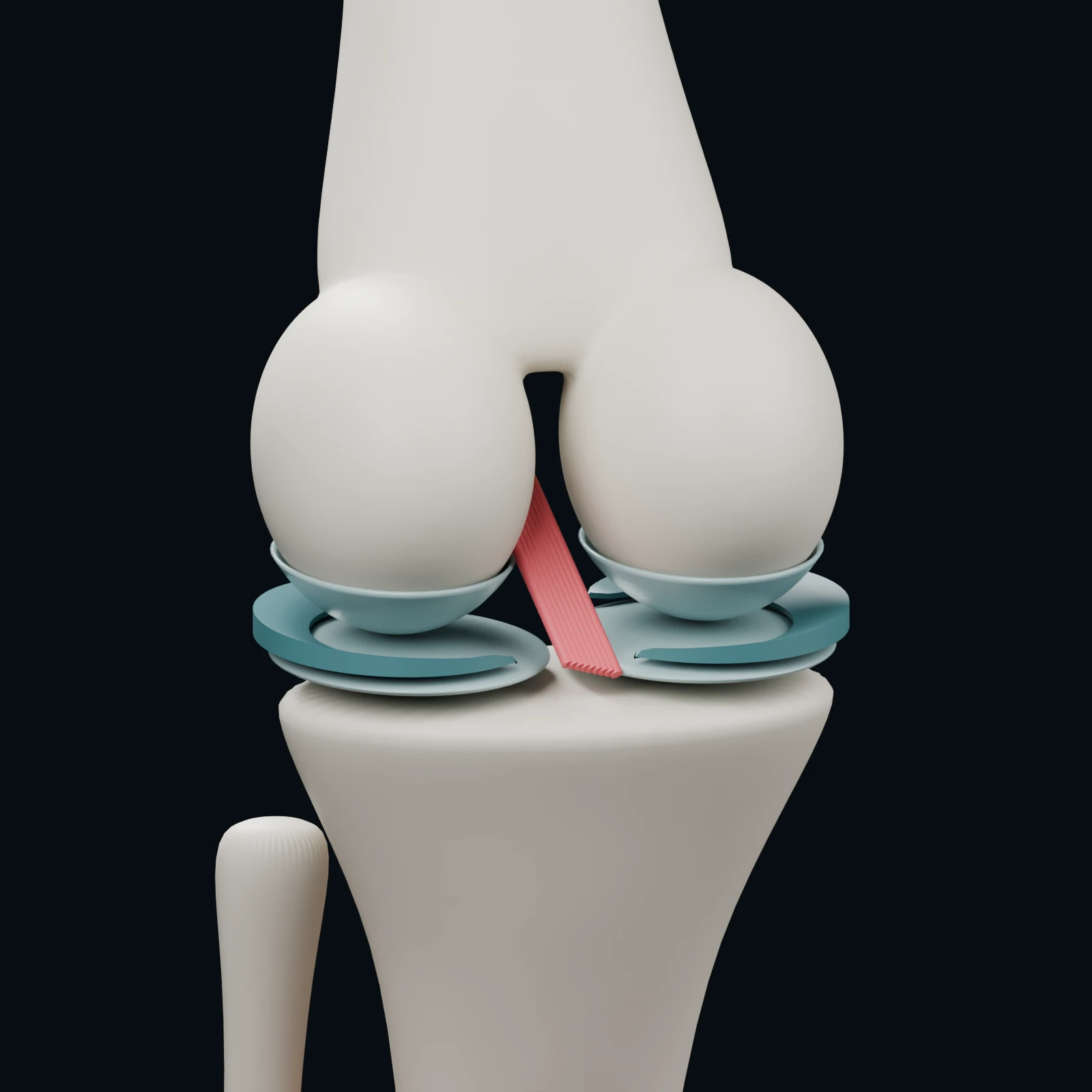 Thigh boneShin boneACL
The ACL helps restrain forward sliding and rotation of the shin.
Compare the loading patterns
These four examples separate movements that can occur together in a real crash. They are not a complete classification or a ranking of injury frequency. For example, the 20-case World Cup study described slip-catch, back-weighted landings and dynamic snowplow as its main categories.[Bere, 2011]
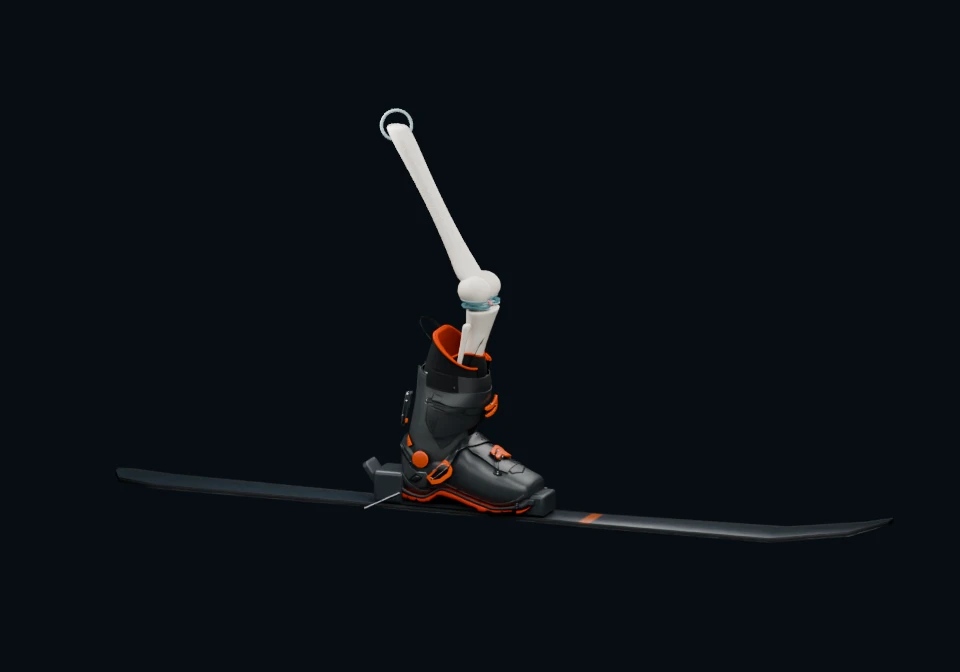
Inside the knee
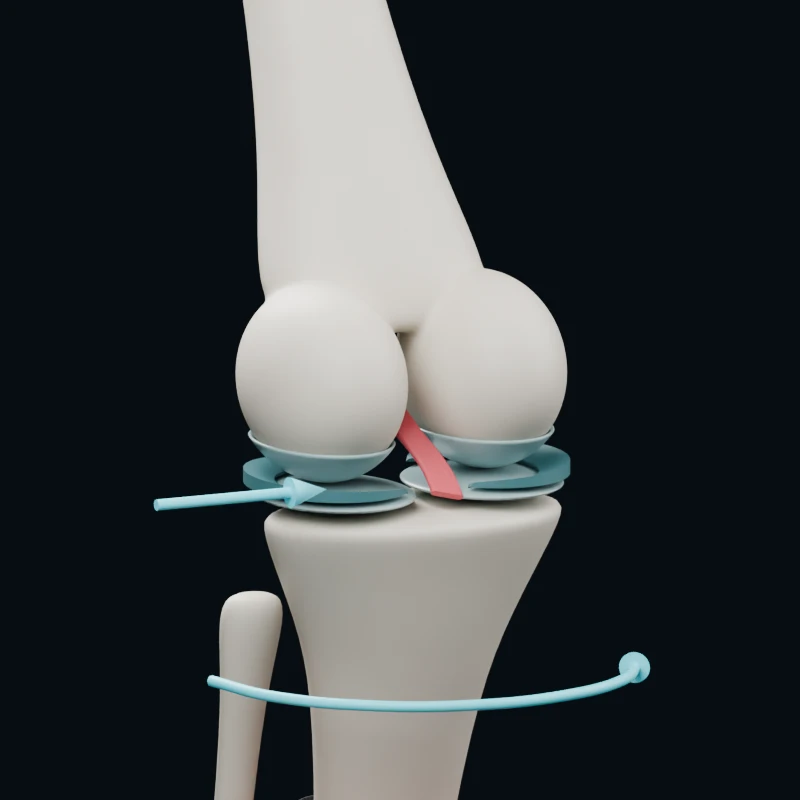
Knee collapses inward as the shin turns inward.
Mechanisms and evidence
Slip-catch
An inside edge catches while the skier tries to regain grip. The knee is forced into flexion, inward collapse (valgus) and internal rotation of the shin. This pattern accounted for 10 of 20 cases in one World Cup video study. That sample is not a population-wide injury rate.[Bere, 2011][Bere, 2013]
Phantom foot and anterior drawer
Phantom foot describes a deep backward fall in which the loaded ski tail can turn the shin inward relative to the thigh.[Vermont Ski Safety][Ettlinger, 1995]Anterior drawer describes forward movement of the shin relative to the thigh. During a back-weighted landing, boot-cuff loading and quadriceps forces have been proposed as contributors, alongside joint compression.[Bere, 2011] These are related situations, but rotation and forward shear are different movements.
Hyperextension
Laboratory work supports concern about an extended or hyperextended knee combined with inward twisting.[Hame, 2002] This figure isolates the extension component, without assigning an injury frequency or a failure angle. It differs from the rapid knee flexion seen in the reconstructed slip-catch cases.[Bere, 2013]
What a binding responds to
Lateral toe release and upward heel release are two familiar release modes. Some designs provide additional or combined release paths. The exact mechanism depends on the binding model.[Tyrolia]Mechanical bindings respond to loads transmitted through the boot. They do not directly sense the internal state of the knee.
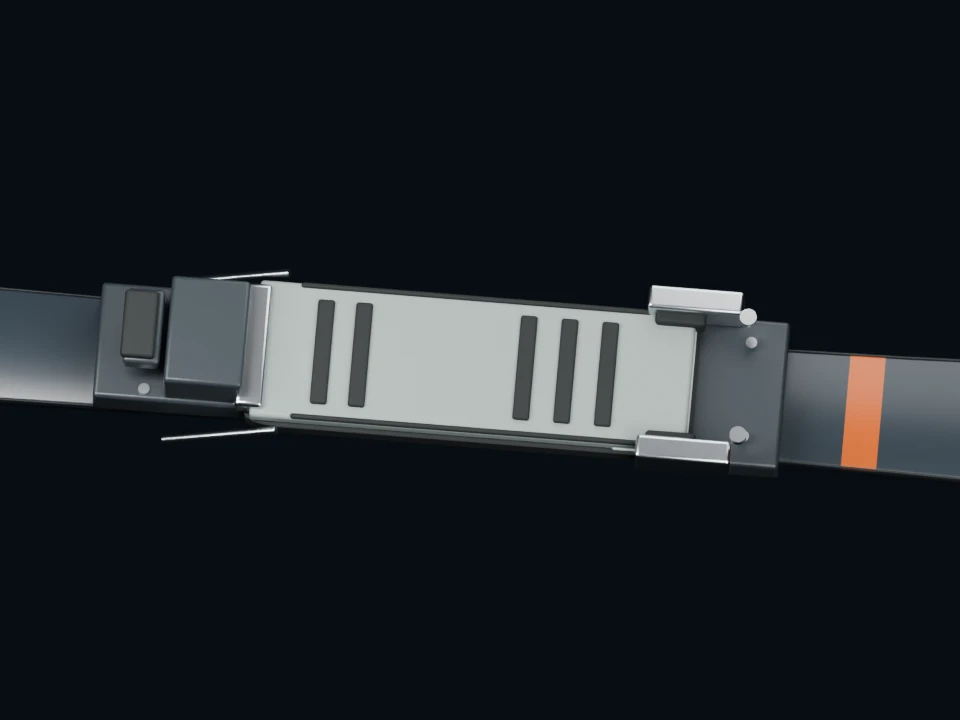
The toe moves sideways across the ski.
Same units, different forces
A laboratory tensile test loads an isolated femur-ACL-tibia specimen under a defined protocol. Woo and colleagues showed that specimen age and test orientation affect the result.[Woo, 1991] A force measured at the ski acts elsewhere in a much larger mechanical system. The two measurements cannot be treated as interchangeable.
At the ski
736N
75 kg × 9.81 m/s², still, one ski
In the ACL
Not from weight
Ligament tension depends on
- Knee angle
- Muscle forces
- Joint surface contact
- Load direction and rate
Same unit, different structures. One cannot be subtracted from the other.
Fast movement, uncertain rupture timing
In two reconstructed slip-catch injuries, knee flexion and internal rotation changed rapidly over 60 ms. The authors inferred that rupture likely occurred shortly after the sudden motion began; they did not directly observe the ligament tearing.[Bere, 2013]
- Case 1
- Case 2
What remains uncertain
A useful protective system would have to identify hazardous loading, act soon enough and avoid unwanted release during ordinary skiing. Sensor latency alone cannot establish that capability. It would take validation of the complete mechanism and evidence that it reduces injury, including across different skiers and crash situations.
These models are a way to understand anatomy and loading directions. Their poses, colours and arrows are explanatory choices, not patient-specific measurements or clinical validation.
Sources and study context
- AAOS OrthoInfo. Anterior cruciate ligament (ACL) injuries. Knee anatomy and ligament function.
- Bere et al. Mechanisms of anterior cruciate ligament injury in World Cup alpine skiing: a systematic video analysis of 20 cases. Am J Sports Med. 2011;39:1421–1429.
- Bere et al. Kinematics of anterior cruciate ligament ruptures in World Cup alpine skiing: 2 case reports of the slip-catch mechanism. Am J Sports Med. 2013;41:1067–1073.
- Woo et al. Tensile properties of the human femur-anterior cruciate ligament-tibia complex: the effects of specimen age and orientation. Am J Sports Med. 1991;19:217–225.
- Tyrolia. Safety features. Manufacturer descriptions of toe and heel release mechanisms; features vary by model.
- Ettlinger, Johnson and Shealy. A method to help reduce the risk of serious knee sprains incurred in alpine skiing. Am J Sports Med. 1995;23:531–537.
- Hame, Oakes and Markolf. Injury to the anterior cruciate ligament during alpine skiing: a biomechanical analysis of tibial torque and knee flexion angle. Am J Sports Med. 2002;30:537–540.
- Vermont Ski Safety Research. Tips for knee-friendly skiing. Phantom-foot mechanism described by the research group.